Why Museums Matter and Why Nova Scotia’s South Shore Has Some of the Best
There’s a moment that happens in museums.
It’s quiet, you almost miss it if you’re moving too fast. You’re standing in front of something maybe it’s a fishing net, a handwritten journal, a dory worn smooth by decades of Atlantic swells and suddenly, you’re not just looking at an object. You’re inside a life. Someone else’s story has reached across time and landed squarely in your chest.
That’s what museums do. And it’s why they matter more than we sometimes give them credit for.
More Than Four Walls and a Display Case
We tend to think of museums as quiet places, serious places, places for school trips and rainy afternoons.
The best museums are anything but passive. They’re living arguments for why history belongs to all of us. They ask us to slow down in a world designed for speed. They ask us to stand still long enough to feel something, perhaps it’s connection, grief, wonder, pride, belonging, before we move on with our day.
Museums are where a community says: this happened here, and it mattered.
They are also, quietly, one of the most welcoming institutions we have. A museum doesn’t ask what you do for a living. It doesn’t care whether you came by ferry or by luxury charter. It opens its doors and says: come in. This is yours.
The South Shore Understands This
The South Shore is steeped in history, and our museum share our stories of seafaring adventures, culturally significant events, and how life on the South Shore was lived generations ago.
That’s not a tourism tagline. That’s just true.
From Lunenburg’s waterfront to the quiet roads of Birchtown, from the banks of the Mersey River to the fog-kissed shores of Barrington, this region has done something extraordinary: it has kept its stories. Not locked away, but shared, celebrated and worn with pride.
In Barrington, two museums sit close enough to walk between and together they tell a story of a community that clothed itself, lit its own shores, and refused to let either be forgotten.
The Barrington Woolen Mill was a thriving producer of woolens in the late 19th and early 20th century, when life in rural Nova Scotia required warm, durable clothing. Established in 1882, this turbine-driven mill changed the way local fishing and farming families made the yarn and cloth they needed. Today, visitors can see the machinery that transformed raw fleece into yarn and cloth, and listen to stories about the lives of the local mill workers. The looms are still there. The floorboards are still lanolin-soaked. The river still runs beside it.
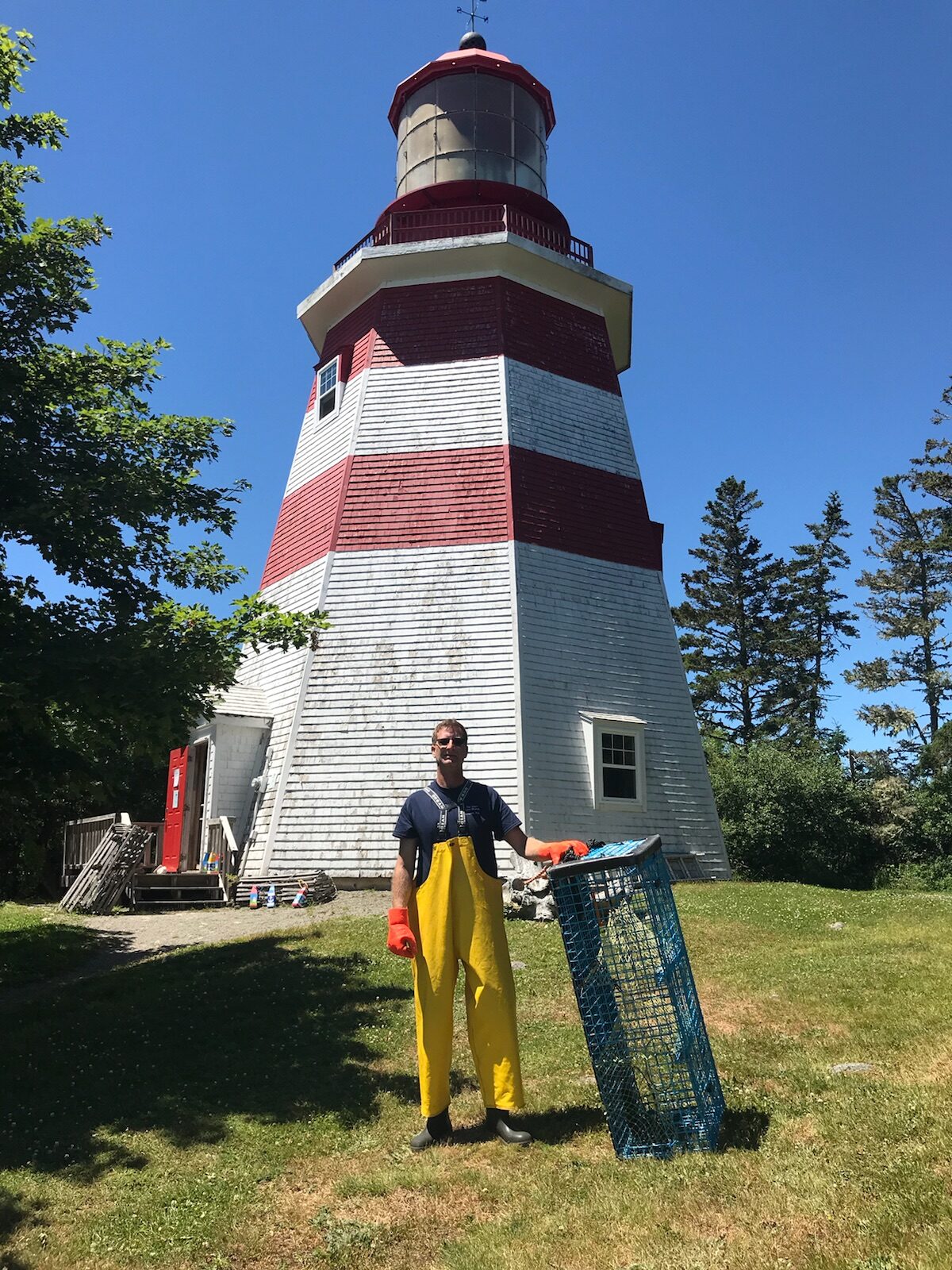
Then look up. The Seal Island Lighthouse, a replica of the top half of the Seal Island Lighthouse, displays lighthouse equipment and memorabilia and tells the fascinating history of the lights on Cape Sable Island, Bon Portage, and Seal Island. From the third level, you can climb the iron stairs as the keepers did for 76 years and see the original clockwork mechanism and a Fresnel lens. The view of Barrington Bay from the top will stop you cold, in the best possible way.
The Black Loyalist Heritage Centre in Birchtown shares the story of the Black Loyalists, free men and women who fought for the British during the American Revolution and won their freedom. That is not a footnote in someone else’s history. That is a story of survival, of will, of humanity at its most defiant and triumphant and it lives right here.
And then there is Perkins House in Liverpool, a Cape Cod built in 1766 for Simeon Perkins, a Connecticut-born Planter who arrived, planted roots, and never looked back. For over 40 years, Perkins recorded daily li fe in Liverpool in extraordinary detail, ships and captains, epidemics and wars, family and loss, leaving behind a diary now considered one of Canada’s most valuable historic documents. He wrote it all down at his desk, in this house, on what is now Main Street. You can still feel the weight of the pen.
At Ross Farm Museum in New Ross, an authentic, living heritage site, much of the farm remains the same as it was in the 1800s, from historic Rose Bank Cottage to daily activities such as wool spinning, candle making, and ox shoeing, giving visitors the chance to experience yesterday’s traditional farming methods while learning sustainable ways of living for today.
And then there is Lunenburg. Come and explore life at sea, up-close and personal at the Fisheries Museum of the Atlantic in the UNESCO World Heritage Town of Lunenburg. Within these walls, once a working fish plant, now something altogether more powerful, an industry, a culture, and a way of life are preserved with honesty and depth.
The DesBrisay Museum, nestled in Woodland Gardens in the heart of Bridgewater, is home to a collection of more than 11,000 heritage artifacts. Eleven thousand stories. Eleven thousand pieces of someone’s life, someone’s work, someone’s love, gathered and cared for so that we don’t forget.
Museums Are an Act of Love
Here is what we don’t say often enough: keeping a museum running is an act of devotion.
The volunteers who restore fishing gear. The archivists who catalogue letters in handwriting no one under fifty can read anymore. The guides who tell the same story forty times a summer and make it feel new each time because for someone in that room, it is new.
They are all saying the same thing: this place matters. These people mattered. You should know about them.
And when you walk into a South Shore museum, any one of them, you feel that care immediately. It’s in the signage written with warmth, not distance. It’s in the artifacts arranged not as objects but as invitations. It’s in the sense that someone wanted you, specifically, to feel at home here.
Why It Matters Where You Visit
Tourism built on experience is tourism built to last.
When visitors come to the South Shore and spend an afternoon at a museum, something shifts. They stop being tourists moving through a checklist. They become people who were changed by a place. Who go home and tell someone about the Black Loyalists, or man and his diary, or the living farm that still smells like the 1800s.
That is the difference between a trip and a memory.
It’s a history and heritage we appreciate and celebrate throughout our marvellous museums, during our many history festivals, throughout our storied architecture and must-see monuments and we invite you to celebrate with us and experience as much of our history as you can squeeze into your stay.
There is no better invitation than that.
Come. Stay. Feel Something.
The next time you’re planning a day on the South Shore, whether you’re a first-time visitor or someone who’s driven these roads your whole life, step inside a museum.
Not because you should. Not because it’s on a list.
But because somewhere in there, behind glass or behind a door left deliberately open, someone left something for you. A piece of a life. A fragment of a story. A moment that says: you belong to this place, and it belongs to you.
That’s what museums do.
And on Nova Scotia’s South Shore, they do it beautifully.
Explore all the heritage and culture experiences on Nova Scotia’s South Shore at visitsouthshore.ca.
